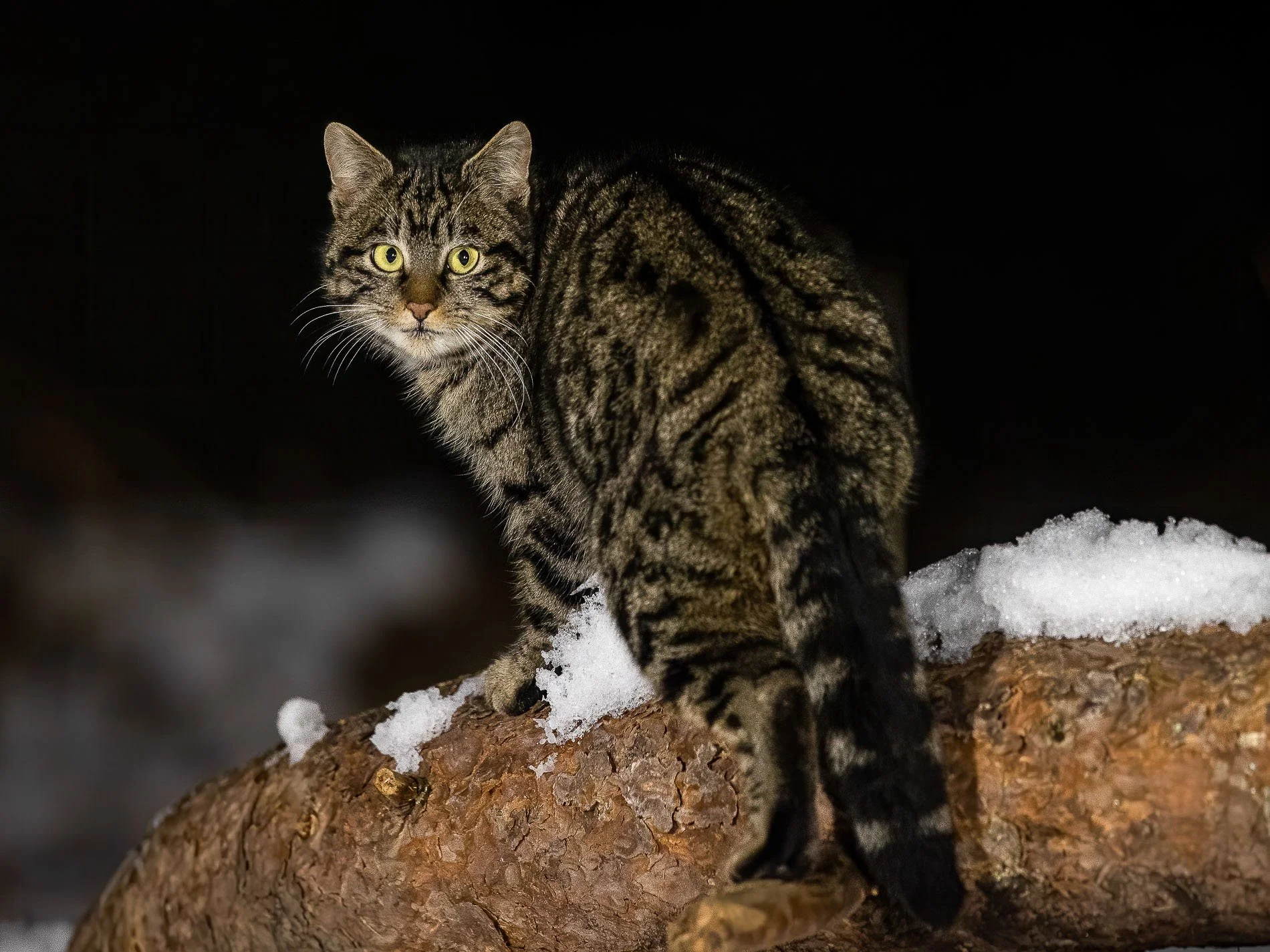
Scottish Wildcat
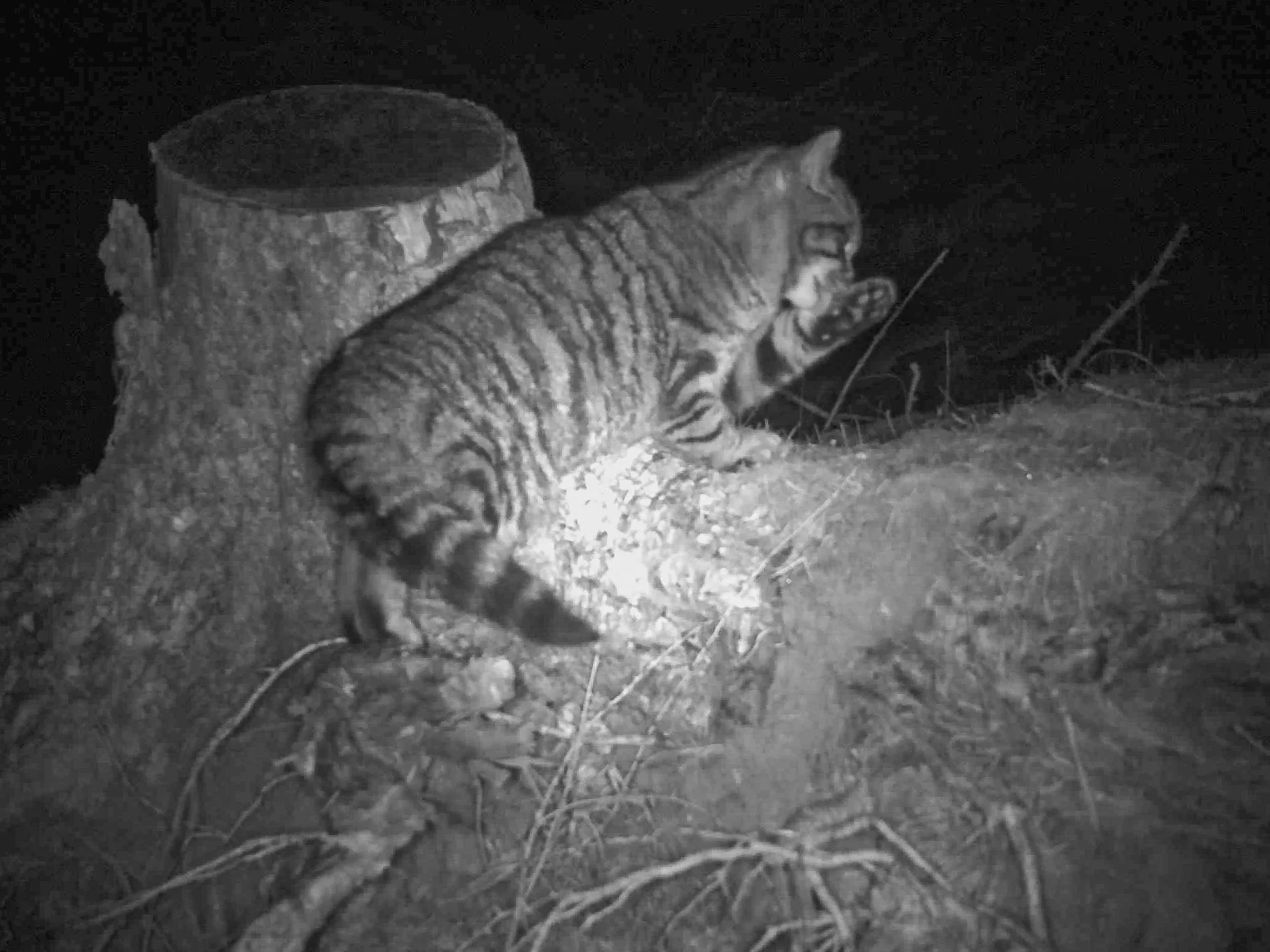
My involvement with the wildcat started by answering an advert by Scottish Wildcat Action for volunteers to help with a survey in the Angus Glens. I hadn’t realised that the Angus Glens were a haven for the Scottish wildcat or how important the area was.
The first meeting introduced the twenty or so volunteers to what they had let themselves in for.
The purpose of the survey was to establish if there was a viable population of wildcats and if they could be saved from extinction without human intervention. The first survey was scheduled to last three months in December, January and February and covered a number of locations in Scotland.
We were given a detailed explanation of what our duties included.
Each volunteer was given three locations in the glens to set up stations for recording the presence of wildcats.
A station consisted of a trail camera and a couple of short posts. The posts held the bait, an attractant, salmon oil, and some velcro to try to capture the cats hair. The salmon oil and quail weren’t popular additions to the fridge at home! The camera was set to focus on the bait.
In the first year my three stations were at the head of Glen Clova. We were given a general area and expected to identify suitable locations.
I set one up in a clearing in the forest, one by the burn and one at the edge of the forest.
Once set up the stations were left for two weeks before returning to recover the camera SD cards, check batteries and renew the bait.
The anticipation of the first return was exciting, had the bait been taken, would I have any images, would I have recorded any wildcats.
The bait, quail, had been stripped to the bone but the camera had no images. This baffled me for sometime until I eventually discovered that the bait was been eating by wood mice.
Further visits were more successful with images of pine marten, roe deer, foxes, a beagle dog and eventually my first wildcats.
This led to over four years working with SWA and Forestry & Land Scotland surveying for wildcats in the Angus Glens.
Sadly the final report concluded that the Scottish Wildcat did not have a viable population and that human intervention would be needed to save them form extinction.
Saving Wildcats was established and is successfully breeding cats and releasing them into the Cairngorms.