I have only visited the National park at Lake Nakuru once in the past few years and decided to have a look at the images I took on that visit. It was part of a trip that took me to other parts of Kenya, Lake Bogoria, and Lake Naivasha.
Some facts about Lake Nakuru and the National Park.
Lake Nakuru is one of the Rift Valley lakes, located at an elevation of 1,754 m (5,755 ft) above sea level. It lies to the south of Nakuru, in the rift valley and is protected by Lake Nakuru National Park.
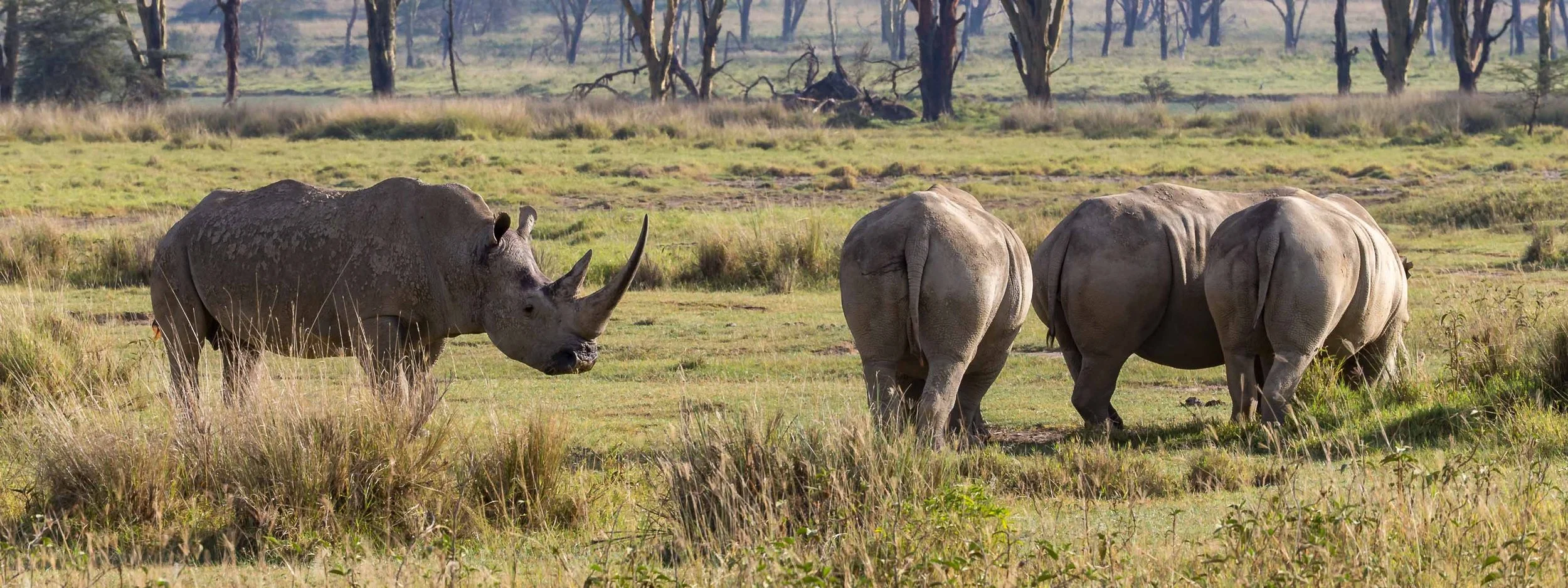
In 2009, the park had more than 25 eastern black rhinoceros, one of the largest concentrations in the country, plus around 70 southern white rhinos. It is also a place where you can see the Rothschild's giraffe, which were relocated for safety from western Kenya beginning in 1977.
The rhino were easy to find and I spent a few hours with a small group of white rhino.
Since 2021, there has been an alarming increase in the rising water levels at the lake caused by climate change. This upsurge of water levels led to displacement of animals from the park and destruction of property, submersion of the main entrance gate and other park infrastructure.
The park has recently been enlarged partly to provide a sanctuary for black rhinos. This has resulted in the need for a fence to keep out poachers.
My journey involved staying in the park for a few nights with the rangers. This had the advantage of being able to stay in the park until it got dark.
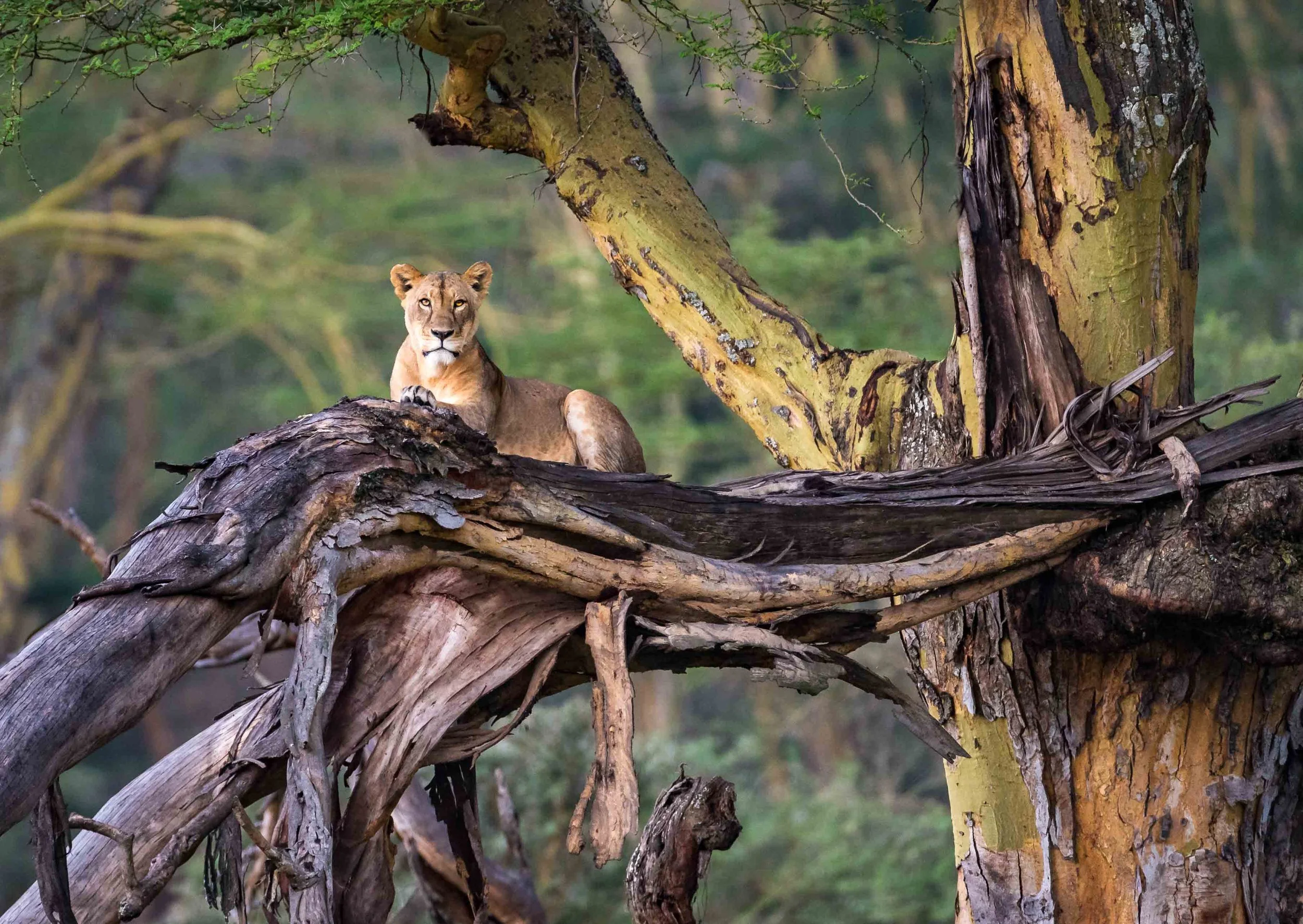
On one occasion we were travelling back to the rangers post when my driver spotted a lioness lying on the branch of a distressed tree taking in the evening light. The light was poor so the photography was difficult but I did image to get this image. As I was packing up I noticed some movement in the grass below the ;lioness and discovered that she had three young cubs playing in the grass below her.
It just shows that you need to be vigilant and scan an area even when the light is fading.